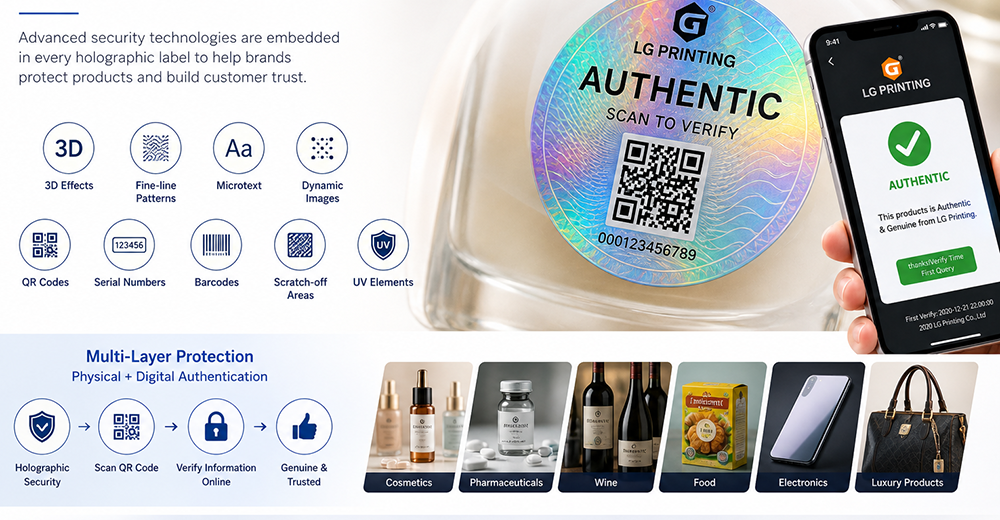
Holographic labels are more than an attractive finishing option. Behind their changing colors, 3D effects, and reflective patterns are security technologies designed to help brands reduce counterfeiting and improve product authentication.
Unlike ordinary printed labels, holographic labels can include 3D effects, fine-line patterns, microtext, dynamic images, and customized holographic structures. These features make the label more difficult to reproduce accurately and allow brands to create a unique visual identity for their products.
For stronger protection, multiple security features can be combined in one label. A holographic label can include QR codes, serial numbers, barcodes, scratch-off areas, or UV elements. Customers can visually check the holographic effect and then scan the QR code to verify product information online, creating both physical and digital layers of authentication.
Customization also plays an important role. Brands can choose different holographic effects, sizes, materials, adhesives, and variable data according to their products and security requirements. Unique QR codes or serial numbers can further connect individual labels with digital authentication records.
Holographic security labels are suitable for cosmetics, pharmaceuticals, wine, food, electronics, luxury products, and other branded goods.
A holographic label should not only make your product stand out. It should also make it harder to copy, easier to verify, and more trustworthy to customers.