Counterfeit products can cause significant problems for both businesses and consumers. From damaged brand reputation to unsafe products, fake goods can undermine customer trust and create financial losses. Anti-counterfeit labels provide an effective way for brands to add an additional layer of protection to their products.
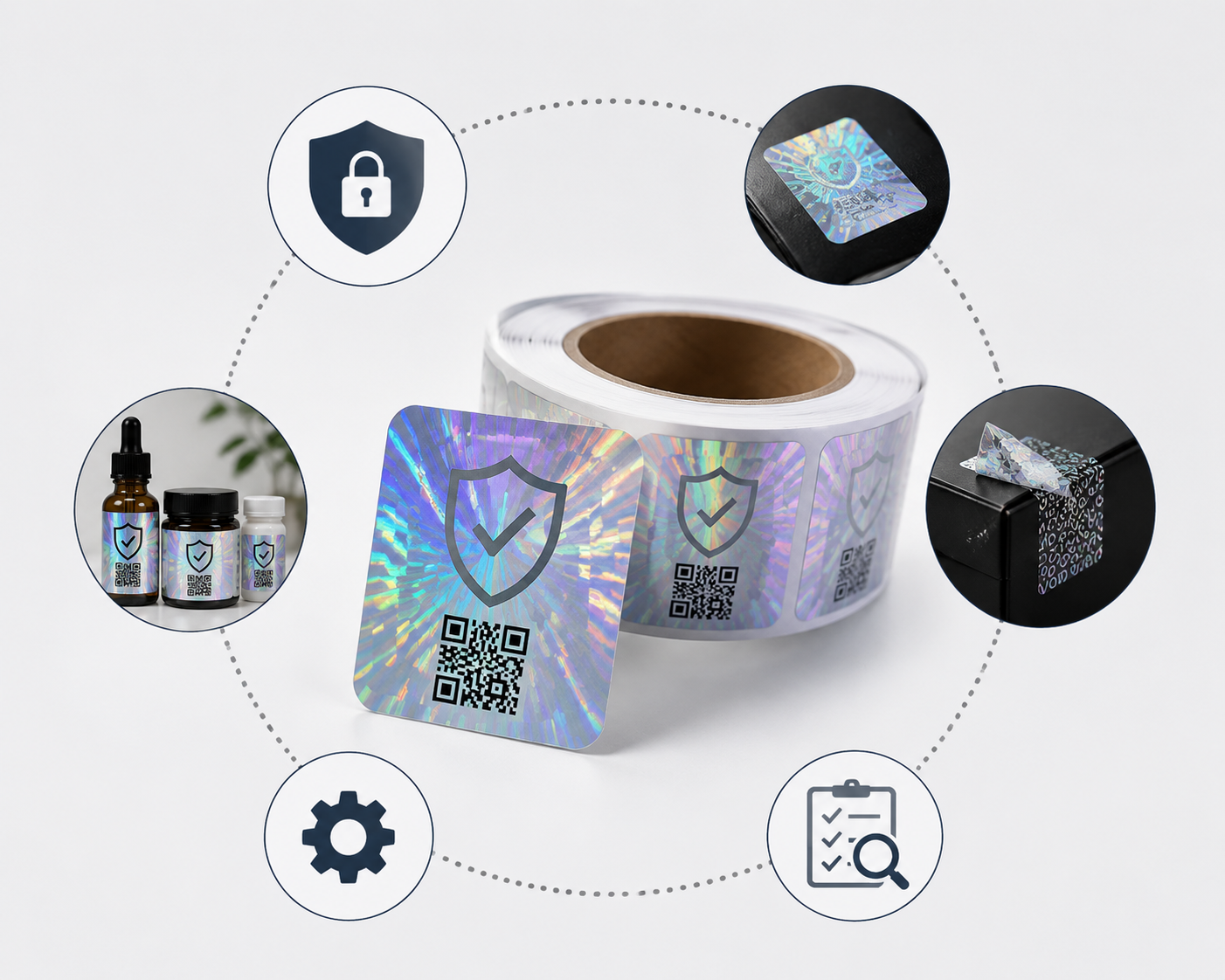
Modern anti-counterfeit labels use a combination of visible and hidden security features. Holographic effects, unique patterns, microtext, serial numbers, and tamper-evident materials can make labels much more difficult to reproduce. Consumers can often identify genuine products by checking specific visual features on the label.
Digital authentication has further improved the capabilities of security labels. QR codes and unique identification numbers can connect a physical product to an online verification system. After scanning the QR code, customers can check whether the product is genuine and access relevant product or brand information. This creates a convenient authentication process while helping brands monitor product verification activity.
Anti-counterfeit labels are suitable for a wide range of industries, including cosmetics, electronics, pharmaceuticals, luxury goods, beverages, and consumer products. Labels can be customized according to the product's shape, packaging, brand identity, and security requirements.
Beyond preventing counterfeiting, security labels can strengthen consumer confidence and demonstrate a brand's commitment to product authenticity. By combining physical security features with digital verification, brands can create a more reliable protection system.
As counterfeiting technologies continue to evolve, anti-counterfeit labels will remain an important part of modern brand protection and product authentication strategies.