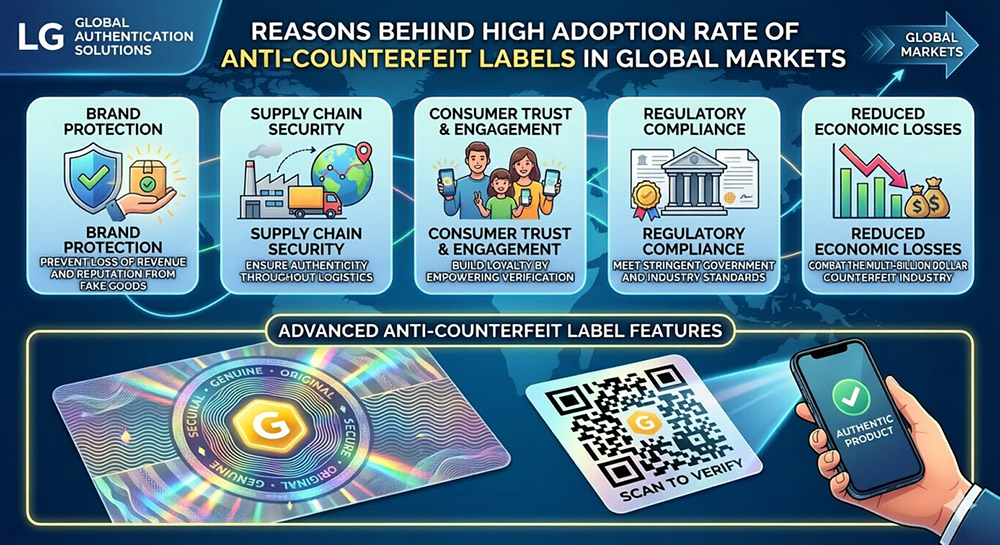
In recent years, the global market for anti-counterfeit packaging has seen an unprecedented surge in adoption across diverse sectors—from consumer electronics and luxury goods to agriculture and heavy industry. This is not merely a trend; it is a systemic shift in how global trade operates.
Why are businesses worldwide suddenly prioritizing advanced labeling solutions at such a high rate? The answer lies in a combination of regulatory pressure, technological accessibility, and shifting consumer psychology.
Governments worldwide are tightening the noose on illicit trade to protect tax revenue and public safety.
In the past, high-level anti-counterfeiting was expensive and required spe-cialized hardware to verify. That has changed.
Smartphone Ubiquity: Today, every consumer carries a high-powered scanner in their pocket. The ability to verify a product via a standard smartphone has lowered the "barrier to entry" for brands, making sophisticated protection more affordable and scalable.
Cloud-as-a-Service: Modern manufacturers can now integrate anti-counterfeit databases via the cloud, eliminating the need for brands to build their own expensive IT infrastructure.
Logistics Transparency: In global shipping, products pass through multiple "grey zones." Brands are adopting security labels to ensure that what was shipped from the factory is exactly what arrives at the international customer's doorstep, without being swapped in transit.
Marketplace Compliance: Global giants like Amazon and Alibaba now incentivize (and sometimes require) brands to use secondary authentication measures to reduce return rates and fraud disputes.
The rapid adoption of anti-counterfeit labels in global markets is the result of a "perfect storm": tougher laws, smarter consumers, and more accessible technology. For brands operating on an international scale, these labels are no longer just a defense mechanism—they are a critical component of a modern, resilient, and transparent global supply chain.