As counterfeit products become more sophisticated, brands are constantly seeking better ways to protect their products and maintain consumer trust. Product authentication has evolved significantly, moving from traditional visual security features to connected digital technologies.
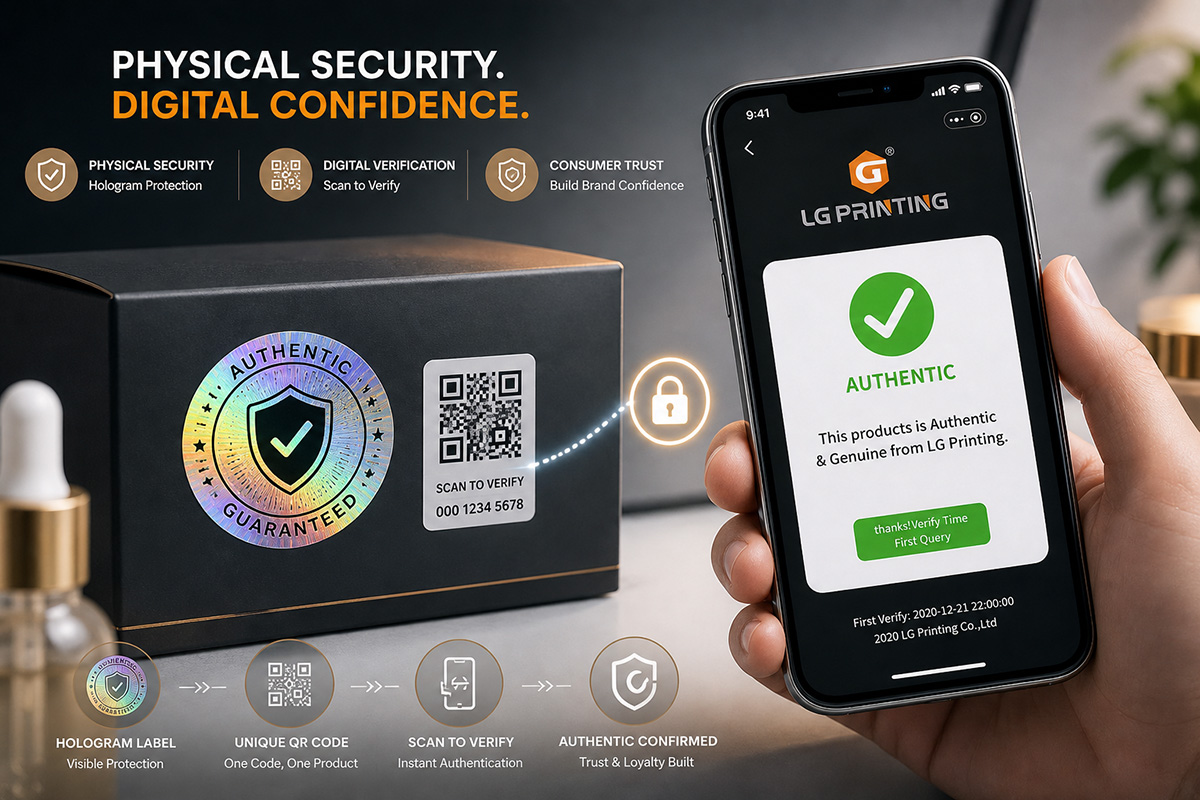
Hologram labels were among the earliest widely used solutions. Their unique optical effects, changing colors, and three-dimensional patterns make them difficult to reproduce accurately. Custom hologram stickers can also incorporate logos, serial numbers, or security patterns, providing an immediate visual indication of authenticity.
However, modern consumers expect more than a label they can simply look at. This has driven the development of QR code authentication. By scanning a unique QR code with a smartphone, customers can access product information, verify authenticity, and sometimes view additional details such as production information or brand messages.
The combination of physical and digital security is becoming increasingly important. A product can use a hologram sticker as a visible security feature while a QR code provides digital verification. This layered approach makes counterfeiting more difficult while creating a more convenient authentication experience.
Looking ahead, product authentication will continue to connect physical security labels with digital platforms. For brands, adopting solutions such as holograms, serialized QR codes, and digital verification systems can help strengthen brand protection while building greater confidence among customers.